
Market position as of 25 October 2026
For a cocoa processor, the main signal is not the bean quotation alone. What matters is how that quotation affects the cost of liquor, butter extraction yield, cake quality, powder marketing and the ability to sell all fractions generated by grinding.
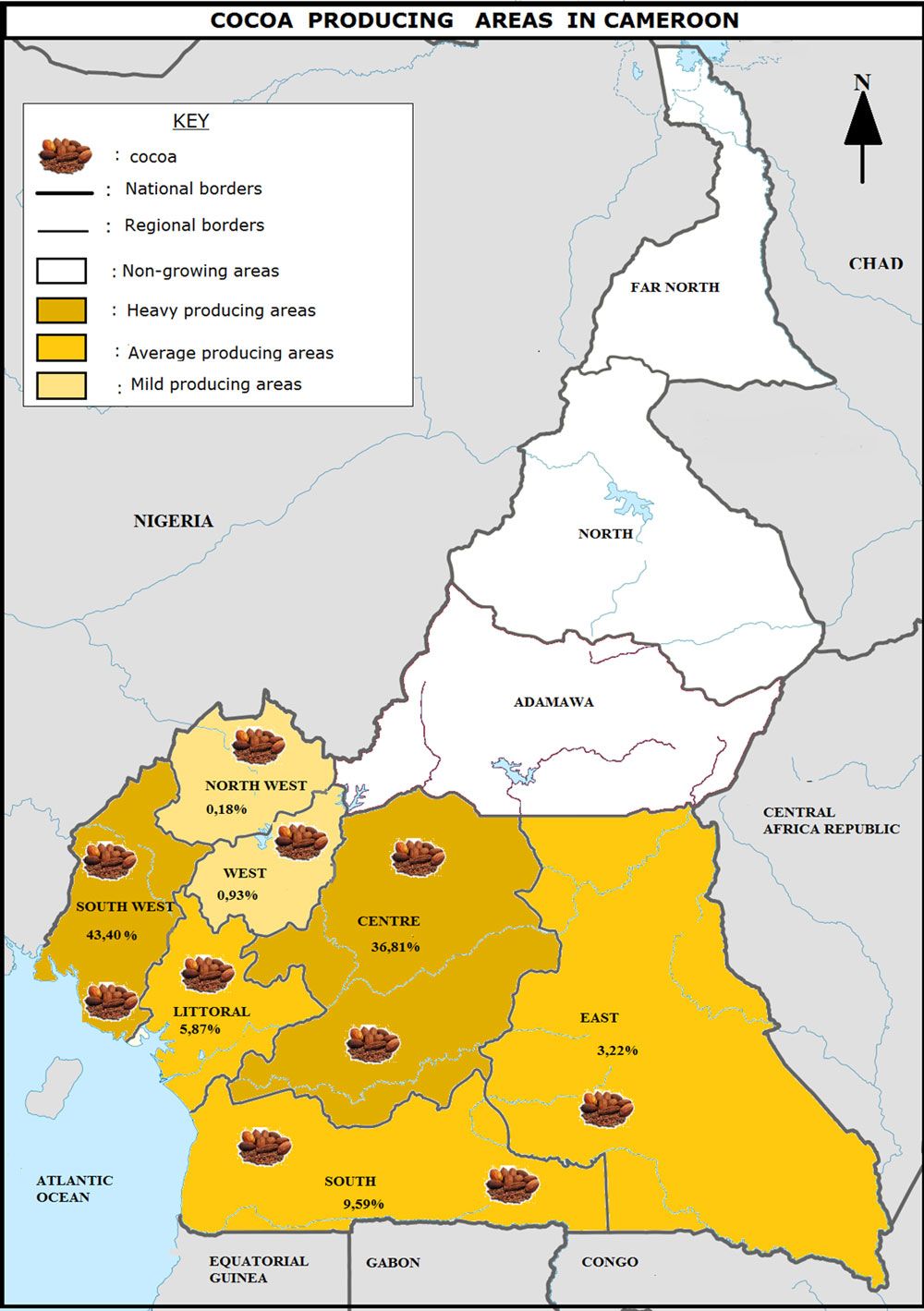
In Cameroon, the NCCB displayed a cocoa indicator of XAF 3,293 per kilogram CIF and XAF 3,214 per kilogram FOB on 23 October. Its published buying range for the Moungo area was XAF 1,600 to XAF 1,700 per kilogram. These figures are market references, not guaranteed procurement prices for an industrial buyer. Actual delivered-to-plant cost will also depend on quality, transport, storage, contractual terms and intake controls.1
International monitoring currently presents mixed signals: an announced recovery in world production, smaller deliveries in Côte d’Ivoire, continued volatility and weaker grinding activity in some markets. A headline reporting ICCO data refers to an 8.5% increase in global production to 4.733 million tonnes for 2024/2025. Those figures should be checked against the original ICCO publication before they are used for contracting, budgeting or capacity planning.5
What the signals mean for processing
Bean cost and availability
The buying range published for Moungo needs to be assessed alongside the industrial yield expected from each origin and lot. Lower-priced beans can prove more expensive to process when they carry more defects, inconsistent moisture, uneven fermentation or an insufficient fat yield. The relevant manufacturing metric is therefore the cost of usable raw material after sorting and processing, rather than the nominal purchase price per kilogram alone.
Reports of smaller deliveries in Côte d’Ivoire also illustrate the regional sensitivity of cocoa supply. Reuters reports that Ivorian farms continue to face the effects of an earlier heat event. For a Cameroon-based processor, these developments support closer monitoring of domestic availability, competition among buyers and quality consistency. They should not, however, be treated as proof that Ivorian conditions apply directly to Cameroon.6,7
Managing butter, powder, liquor and cake together
Cocoa grinding produces interdependent outputs. Liquor can be sold directly or pressed into butter and cake, with the cake subsequently milled into powder. A decision to increase pressing cannot therefore be based on butter demand alone. It must account for available customers and specifications for both cake and powder.
International headlines refer to chocolate manufacturers protecting their businesses against cocoa price swings, while another report points to weaker Brazilian grinding amid declining demand. These are editorial market signals rather than a sufficient basis for a sales plan. They nevertheless reinforce the need for separate commercial discussions covering liquor, butter, powder and cake, with product specifications agreed before manufacturing.8
A reported cocoa-powder recall in France over alleged chemical contaminants also highlights the importance of analytical testing, batch-release procedures and internal traceability. Based on the available extracts, that incident does not concern a Cameroonian product or SAMEN INDUSTRY.9
Implications for SAMEN INDUSTRY
The Baré-Bakem project targets a grinding line of about 4 tonnes per hour, equivalent to about 32,000 tonnes of beans per year, with butter, powder, liquor or mass, and cake among its intended products. At this scale, commercial preparation must cover the complete material balance rather than a single derivative. Operating priorities include supplier qualification, intake specifications, lot segregation, yield monitoring, quality analysis and coordinated contracting for the resulting products.
On documentation, the NCCB highlights initiatives supporting origin-level quality and traceability, together with the digitalisation of export procedures. The European Commission also stresses the availability and quality of information on forests and commodity supply chains. For a processor targeting European buyers, this points to the need to prepare origin-data collection, evidence retention, consistency between physical lots and supplier records, and structured information transfer to customers.1,10
These measures support documentary readiness for the EU deforestation regulation. They do not justify describing any lot or SAMEN INDUSTRY as EUDR documentary readiness.
Information still to be confirmed
Confirmed factsThe plant was announced for commissioning before July 2026, but the sources supplied for this market review do not confirm its operating status as of 25 October. Actual bean availability, yields by origin, derivative specifications, offtake contracts and the completeness of traceability files also remain to be verified. These points should be validated before any statement is made about available capacity or delivery commitments.
The processing focus also requires customer-side confirmation. Buyers should specify whether they require liquor, deodorised or natural butter, cake, or powder with defined physical, chemical and microbiological characteristics. No such specifications or certifications can be inferred from the market sources reviewed here.
Sources
- 1.ONCC Cameroun (opens in a new window)oncc.cm/home
- 2.businessincameroon.com (opens in a new window)businessincameroon.com/agriculture
- 3.environment.ec.europa.eu (opens in a new window)environment.ec.europa.eu/topics/forests/deforestation_en
- 4.news.google.com (opens in a new window)news.google.com/rss/search?q=cocoa+OR+cacao+price+OR+ICCO&hl…
- 5.Comunicaffe International
- 6.Barchart
- 7.Reuters
- 8.Food Dive; source: Valor International
- 9.Le Figaro
- 10.European Commission
Related news

Cocoa processing: securing beans and derivative outlets
Cameroonian bean prices remain a major input-cost factor. Industrial priorities are bean quality, balanced butter-powder sales and documentary readiness for traceable production lots.
Cocoa processing: securing beans and managing derivative value
Cameroon's bean price environment increases the importance of industrial yield. Butter, powder, liquor and cake must be managed through quality, market outlets and traceability.
Cocoa processing: bean availability returns to the centre of grinder strategy
Cameroon’s published bean levels keep raw-material costs under pressure. Internationally, harvest delays and recovering grindings call for tighter procurement, inventory and cocoa-derivative planning.