

Main signal: bean availability is becoming an industrial constraint
The Cameroonian news flow contains a signal with direct implications for processors. Business in Cameroon lists an article titled “Cameroon’s Cocoa Processing Falls 13% as Bean Supply Shrinks.” The available extract provides no comparison period, tonnage or breakdown by processor. The reported rate therefore needs to be checked against the full article or a primary industry source. Even with that limitation, the direction of the signal matters: tighter bean supply may reduce grinding-line utilisation and increase the raw-material cost allocated to each unit of finished or semi-finished output.2
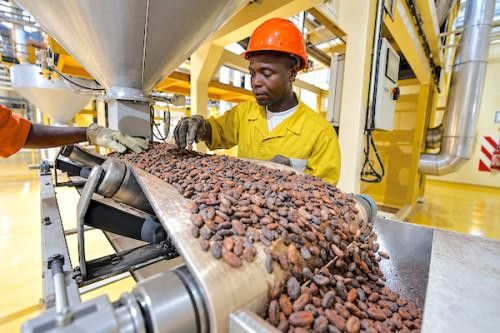
For a processor, the issue extends beyond the bean purchase price. A regular factory intake supports cocoa liquor production and then determines the joint output of butter and cake during pressing. Cake may subsequently be milled into powder. Disrupted procurement can therefore affect several commercial products at the same time and make it more difficult to fulfil contracts for butter, powder, liquor or cake.
Cameroon price indicators: procurement references, not derivative quotations
As of 4 September 2026, ONCC displayed a cocoa CIF indicator of XAF 3,365/kg, an FOB indicator of XAF 3,285/kg and a Douala buying range from exporters of XAF 2,600 to XAF 2,800/kg. These figures are bean-market references. They are not quotations for cocoa butter, powder, liquor or cake, and they are not sufficient on their own to calculate a processing margin.1
An industrial buyer must compare bean-market movements with collection, transport, storage, quality-control, energy and packaging costs, as well as the yields actually obtained from each lot. The physical and sensory characteristics of incoming beans also influence processing stability and derivative quality. Procurement decisions should therefore combine availability, suitable quality, documented origin and delivered cost rather than rely on a single headline price.
International market: mixed signals require product-level decisions
The news feed focused on the ICCO relays an estimate that global cocoa production increased during the 2024/2025 season. The same feed also carries more recent headlines referring to revisions in production and surplus estimates. Because the extracts are aggregated headlines rather than the full primary ICCO documents, their dates, scope and figures should be verified before they are used in procurement plans or contracts.5
For processors, an improvement in global supply does not automatically mean easier access to beans at a specific factory. A reported reduction in Cameroonian grinding can coexist with a global recovery if beans are directed to export channels, local collection is irregular or the required quality is unavailable. Operational planning should consequently monitor physical flows from each sourcing area instead of inferring factory availability from one global indicator.
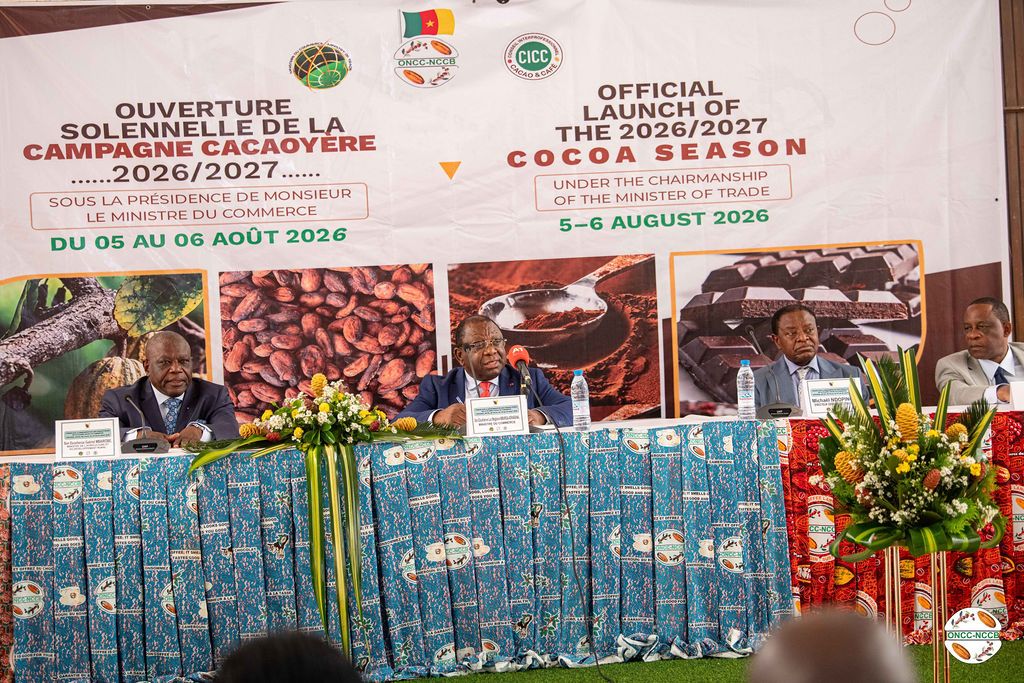
The international derivatives feed also mentions a decline in Brazilian cocoa grinding linked to weaker demand. The complete article is not included in the extract, so the size and timing of that movement remain to be confirmed. For a Cameroonian processor, this type of signal supports separate monitoring of liquor, butter and powder sales. Butter and powder originate from the same pressing chain through butter and cake output. Weak demand for one side of this balance can affect the economics of the entire production programme even when the other product still has buyers.6
Traceability: documentary readiness must follow the processing flow
The European Commission states that its deforestation policy seeks, among other objectives, to reduce the land footprint of European consumption and improve the availability and quality of information about commodity supply chains. A separate international headline reports that cocoa sellers in Côte d’Ivoire have faced difficulties using a new traceability system. The operational details require confirmation from the complete report.7,8
For a processor, documentary preparation should start when beans are received and continue through storage, grinding, pressing and packing. The operating system should preserve the relationship between incoming bean lots and the resulting liquor, butter, cake or powder batches. This is documentary readiness work. It does not justify describing any lot or SAMEN INDUSTRY as EUDR documentary readiness.
Implications for SAMEN INDUSTRY
SAMEN INDUSTRY is developing a plant in Baré-Bakem targeting cocoa butter, powder, liquor and cake, with a grinding line announced at about 4 tonnes per hour, equivalent to about 32,000 tonnes of beans per year. Against the current market signals, the industrial priorities are to diversify qualified suppliers and sourcing areas, establish intake specifications aligned with the intended derivatives, maintain clear lot identification and connect grinding schedules to confirmed demand for each product.
Commissioning had been announced before July 2026. The sources supplied for this edition do not confirm the plant’s operating status as of 10 September 2026. That status must be updated before it is communicated to buyers or industrial partners.
Verified facts and points requiring confirmation
Confirmed factsVerified facts
Confirmed factsTo be confirmed
Confirmed factsThe period, volumes and companies covered by the reported decline in Cameroonian processing have not been established from the available extract. Global figures attributed to the ICCO should be checked against the relevant primary publication. The reported Brazilian grinding decline, the traceability difficulties mentioned in Côte d’Ivoire and the current operating status of the SAMEN INDUSTRY plant also require documentary confirmation.
Gallery
Sources
- 1.ONCC Cameroon (opens in a new window)oncc.cm/home
- 2.Business in Cameroon (opens in a new window)businessincameroon.com/agriculture
- 3.environment.ec.europa.eu (opens in a new window)environment.ec.europa.eu/topics/forests/deforestation_en
- 4.news.google.com (opens in a new window)news.google.com/rss/search?q=cocoa+OR+cacao+price+OR+ICCO&hl…
- 5.ICCO via Google News
- 6.Valor International via Google News
- 7.European Commission
- 8.Reuters via Google News
Related news
Cocoa processing: securing beans and derivative outlets
Cameroonian and international signals show that processors must manage bean costs, quality, butter and powder outlets, and supply-chain documentation as one integrated industrial issue.
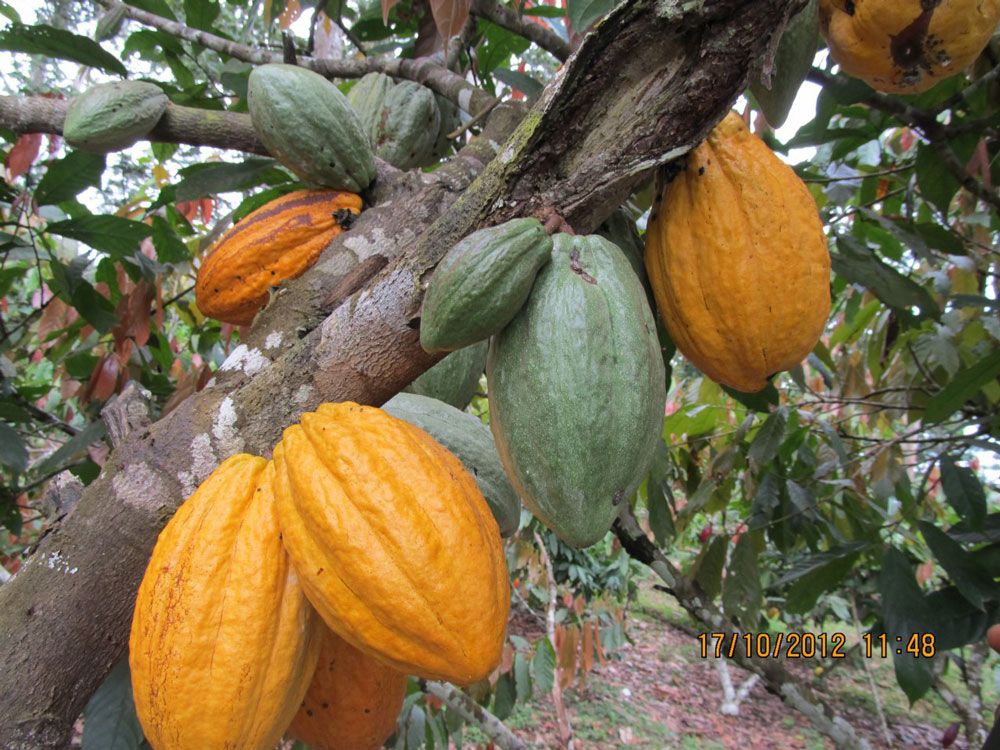
Cocoa processing: securing bean supply and derivative outlets
In Cameroon, bean costs remain critical to grinding economics. International demand signals call for separate commercial strategies for butter, powder, liquor and cake.
Cameroon cocoa: securing grinding supply and derivative outlets
Bean costs remain high in Cameroon while international signals on grinding and demand are mixed. Industrial priorities are quality, butter-powder balance and supply-chain documentation.