
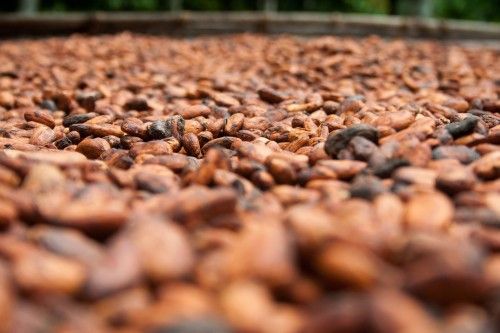
Market overview as of 3 September 2026
For a cocoa processor in Cameroon, today’s central issue is not the bean price alone. The industrial challenge is to secure bean supply, processing quality and commercial outlets for liquor, butter, powder and cake at the same time.

For 2 September, the National Cocoa and Coffee Board reported cocoa indicators of XAF 3,601/kg CIF and XAF 3,517/kg FOB, alongside a XAF 2,750–2,900/kg buying range in Douala from exporters. Business in Cameroon also reported that domestic cocoa prices were approaching XAF 3,000/kg, while its 2 September headline referred to a decline in export revenue.1,2
For local grinding operations, a highly valued bean directly increases working-capital requirements and the raw-material cost embedded in cocoa liquor. It makes contractual sourcing, loss control and a coordinated sales policy for all resulting products increasingly important.
Consequences for bean processing
Cocoa liquor and butter
Cocoa liquor is both a saleable ingredient and the feedstock for further processing. Its competitiveness depends on bean cost as well as consistent fermentation, drying, cleaning, roasting and grinding. Industrial customers need stable specifications to reduce adjustments in their own formulations and production settings.
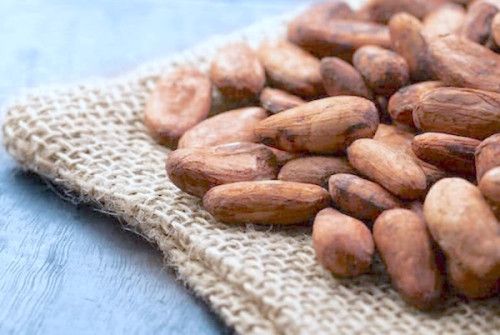
Pressing liquor into butter and cake creates a linked product balance. An attractive outlet for cocoa butter is not sufficient if the corresponding cake and powder cannot be placed under suitable commercial terms. Sales planning should therefore connect butter contracts with demand from beverage, biscuit, dairy, bakery and other powder users.
Cocoa powder and cake
The Google News feed covering cocoa derivatives carries a Valor International headline reporting a decline in Brazilian cocoa grinding amid weaker demand. The available excerpt provides neither a detailed period nor data with which to quantify the movement. It should therefore be treated as a signal requiring verification from the original publication.5
If similar conditions were confirmed in other markets, slower grinding could change the competitive environment for butter, powder and cake. A prudent response for a Cameroon-based processor would be to obtain customer commitments by specification and destination before raising throughput, rather than extrapolating a global trend from one processing market.
Supply, quality and documentary readiness
International supply signals remain mixed. One headline relayed by Barchart links lower cocoa prices to larger supplies from Côte d’Ivoire, while other market coverage points to renewed weather concerns. Reuters reports that heavy rainfall in Côte d’Ivoire has raised fears of flooding and crop disease. These developments initially concern beans, but they can subsequently affect delivery schedules, moisture management, warehouse conditions and the consistency of lots entering a grinding plant.6
Documentary preparation should advance alongside industrial preparation. The European Commission highlights the availability and quality of information concerning forests and commodity supply chains. For a processor, relevant readiness measures include structuring lot identifiers, recording bean origins, retaining supplier documents and maintaining information continuity from intake and storage through grinding and shipment.7
These actions support documentary readiness. They do not, by themselves, justify describing a particular lot or SAMEN INDUSTRY as compliant with the EU Deforestation Regulation.
Relevance for SAMEN INDUSTRY
SAMEN INDUSTRY is developing a grinding line at Baré-Bakem with an announced capacity of about 4 tonnes per hour, equivalent to approximately 32,000 tonnes of beans per year. Its target products are cocoa butter, powder, liquor or mass, and cake.
Against the current market backdrop, the main operational priorities are to qualify sourcing areas and suppliers, establish bean-purchasing specifications, plan working-capital requirements and pre-market the full derivative portfolio. Commercial planning should reflect the physical connection between butter and cake rather than assessing either product in isolation.
Quality control is equally important. Procurement terms should be connected to the characteristics required by the processing line and by downstream customers. Lot separation and traceable production records can also help investigate quality deviations and prepare customer documentation.
Information requiring confirmation
The plant’s commissioning was announced for before July 2026, but the supplied monitoring sources do not establish its current operational status. This point must be confirmed directly by SAMEN INDUSTRY.
Detailed trends in global butter and powder demand, the scale of available Ivorian supply and current grinding data also require confirmation from primary publications before procurement, production or sales contracts are concluded. Aggregated news headlines are useful for identifying risks, but they are not a substitute for verified market data or customer orders.
Gallery
Sources
- 1.ONCC Cameroun (opens in a new window)oncc.cm/home
- 2.Business in Cameroon (opens in a new window)businessincameroon.com/agriculture
- 3.environment.ec.europa.eu (opens in a new window)environment.ec.europa.eu/topics/forests/deforestation_en
- 4.news.google.com (opens in a new window)news.google.com/rss/search?q=cocoa+OR+cacao+price+OR+ICCO&hl…
- 5.Valor International via Google News
- 6.Reuters via Google News
- 7.European Commission
Related news
Cocoa processing: securing bean supply and derivative outlets
In Cameroon, bean costs remain critical to grinding economics. International demand signals call for separate commercial strategies for butter, powder, liquor and cake.

Cocoa processing: balancing bean costs, derivative outlets and traceability
Cameroonian bean indications remain high while international headlines point to softer grinding demand in some markets. Processors must align procurement, quality, butter-powder outlets and documentary readiness.
Cameroon cocoa: securing processing amid bean costs and documentation requirements
Published Douala indicators reinforce the importance of raw-material control. Grinders should prioritise quality, traceability and outlets for cocoa butter, powder, liquor and cake.