
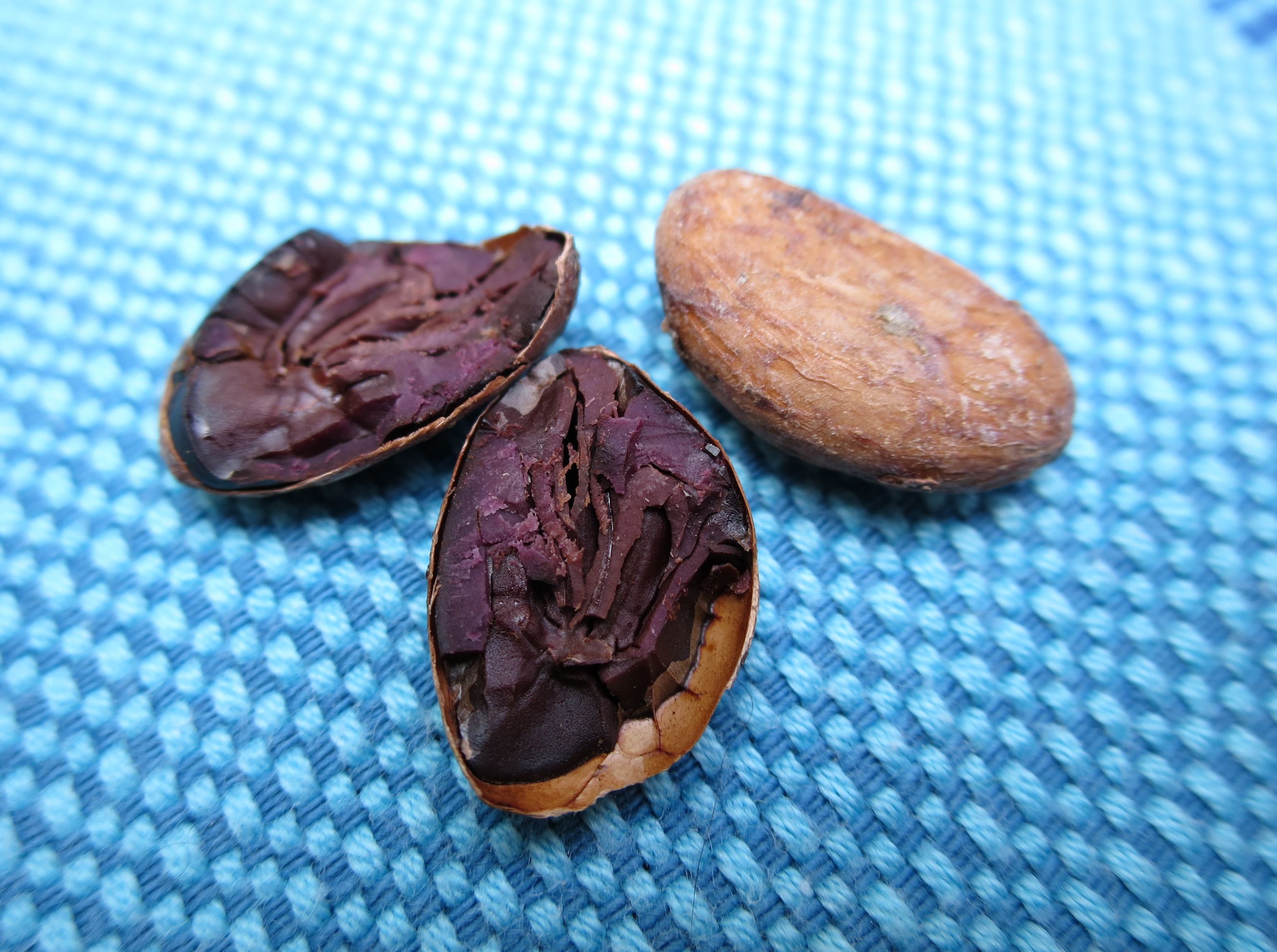
What processors should take from today’s market
As of 24 August 2026, the clearest Cameroon market signal remains the cost of securing beans. For 21 August, the National Cocoa and Coffee Board displayed a CIF indicator of XAF 3,247/kg, an FOB indicator of XAF 3,168/kg and a Douala buying range by exporters of XAF 2,650–2,700/kg. These references are neither a guaranteed procurement price for a processor nor a direct measure of processing margin. They nevertheless point to a market in which raw-bean purchasing can place substantial pressure on working-capital management.1
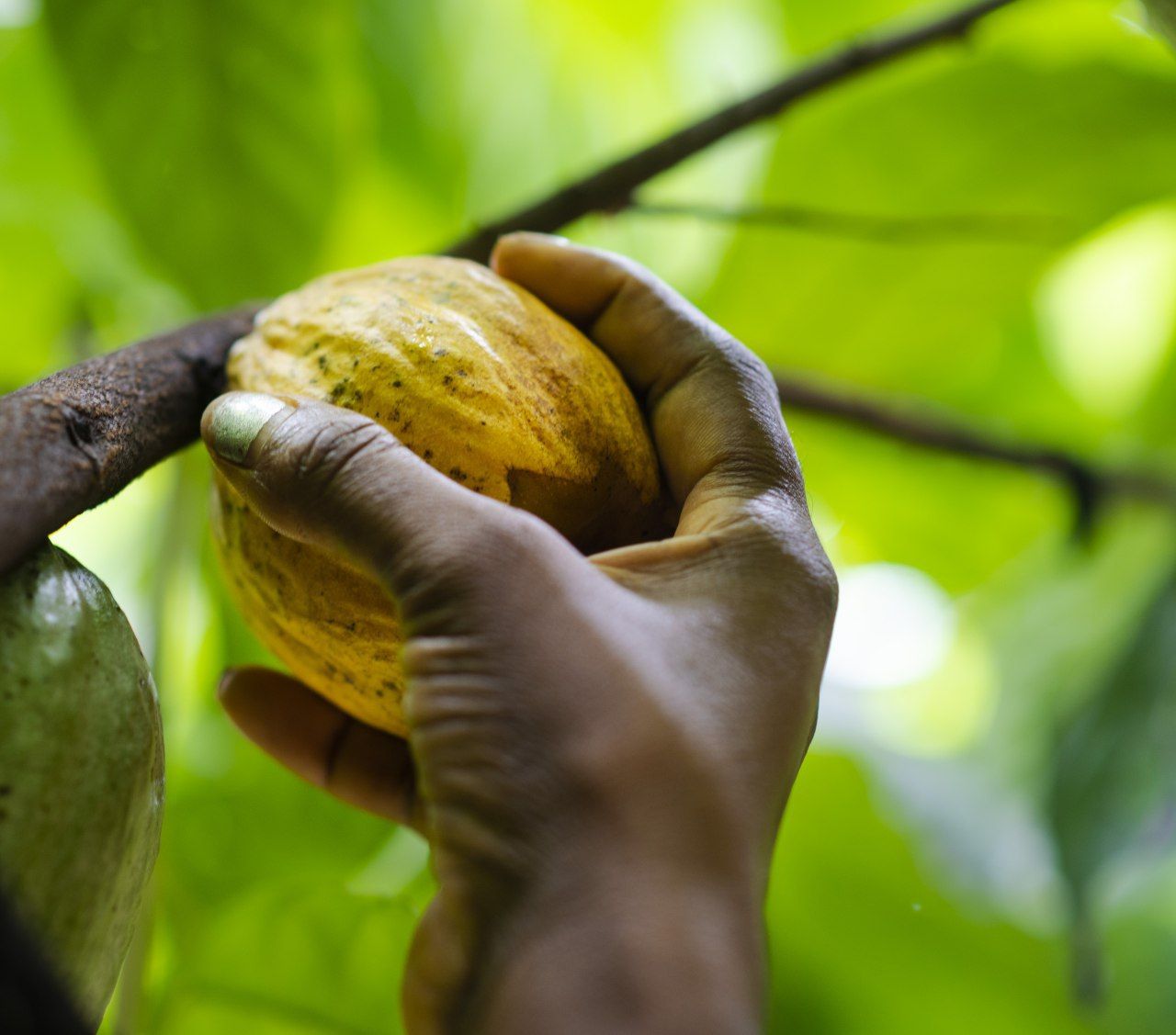
A grinding business must therefore look beyond the bean quotation. Its operating equation includes industrial yield, incoming quality, losses, energy use, logistics and the coordinated value of all resulting products. A change in bean cost first affects cocoa liquor or mass and then the economics of butter, cake and powder produced through pressing and milling.
The commercial priority: managing the full material balance
Bean processing creates linked product streams. Cocoa liquor may be sold as an ingredient or pressed further. Pressing separates cocoa butter from cake, while cake can subsequently be milled into powder. The processor cannot focus only on whichever derivative is currently attracting the strongest enquiries. Butter sales need to be aligned with powder and cake outlets so that one coproduct does not accumulate while another is delivered.
International monitoring currently offers mixed signals. A headline distributed through Google News refers to weaker Brazilian grinding amid declining demand, but the available extract does not establish the detailed period, magnitude or impact on butter-to-powder economics. Another headline says chocolate manufacturers are defending themselves against cocoa price swings, although the extract does not describe the relevant contractual tools or their market reach. These are items for further verification, not sufficient evidence on which to set production volumes.4,5
For industrial buyers and partners, this uncertainty increases the value of precise purchasing discussions. Product type, technical specifications, packaging, collection or shipment schedule and any price-adjustment mechanism should be defined before contracting. For the grinder, every sale should also be assessed against the complete processing balance rather than as an isolated order.

Bean quality determines derivative consistency
When beans are expensive, poor fermentation, uneven moisture, foreign matter and inconsistent lots can have a greater impact on both yield and finished-product consistency. Intake controls should therefore support lot selection, roasting settings and monitoring of the characteristics required for liquor, butter, powder and cake.
Cameroon’s ONCC also highlights cocoa quality, price volatility and the digitalisation of export procedures among current sector topics. For a processor, this supports an integrated approach linking purchasing records, lot files, quality-control results, production records and inventory movements. Such controls matter both for operational efficiency and for answering customers’ technical and documentary requests.1
Documentary readiness for European markets
The European Commission identifies the availability and quality of information on forests and commodity supply chains as a priority in its action on deforestation. Separately, a Reuters headline carried by Google News reports preparedness difficulties in West Africa and possible supply concerns. The supplied extract, however, does not contain enough detail for a country-specific or supplier-specific assessment.6,7
For processors, the practical issue is maintaining the documentary connection between incoming beans and outgoing derivatives, including where beans from different lots are stored, combined or transformed. Preparatory work may include supplier references, origin information, lot documentation, inventory movements and production records requested by customers. This is documentary readiness work. It does not support a claim that a company or a specific lot is EUDR documentary readiness.
Implications for SAMEN INDUSTRY
Verified company information describes a plant under construction in Baré-Bakem on a 3-hectare site, including approximately 1.4 hectares for the main building. The announced grinding line is about 4 tonnes per hour, equivalent to approximately 32,000 tonnes of beans per year. Target products include cocoa butter, powder, liquor or mass, and cake. Estimated investment is XAF 20–30 billion, with 300–500 direct jobs expected.
The foundation stone was laid on 27 February 2026. Commissioning had been announced for before July 2026, but the actual status as of 24 August still requires confirmation; this article does not state that the plant is operational. From a market-development perspective, priorities for SAMEN INDUSTRY include securing consistent beans, qualifying buyers for each derivative, balancing butter and powder outlets, and building lot documentation from the procurement stage onward. These actions would help connect industrial performance, commercial planning and documentary readiness without making unsupported claims about production availability or regulatory compliance.
Gallery
Sources
- 1.ONCC Cameroon (opens in a new window)oncc.cm/home
- 2.environment.ec.europa.eu (opens in a new window)environment.ec.europa.eu/topics/forests/deforestation_en
- 3.news.google.com (opens in a new window)news.google.com/rss/search?q=cocoa+OR+cacao+price+OR+ICCO&hl…
- 4.Valor International via Google News
- 5.Food Dive via Google News
- 6.European Commission
- 7.Reuters via Google News
Related news
Cocoa processing: bean availability returns to the centre of grinder strategy
Cameroon’s published bean levels keep raw-material costs under pressure. Internationally, harvest delays and recovering grindings call for tighter procurement, inventory and cocoa-derivative planning.
Cocoa processing: bean costs, quality and traceability shape grinding decisions
Cameroon’s current signal is a costly bean. Processors must therefore secure supply, control derivative yields and analytical quality, and build traceable documentation from beans to finished cocoa ingredients.
Cocoa processing: managing grinding amid high bean costs and traceability demands
Cameroon’s bean-price environment calls for close control of butter, powder, liquor and cake yields. International signals also highlight demand, quality and traceability issues that processors should verify.